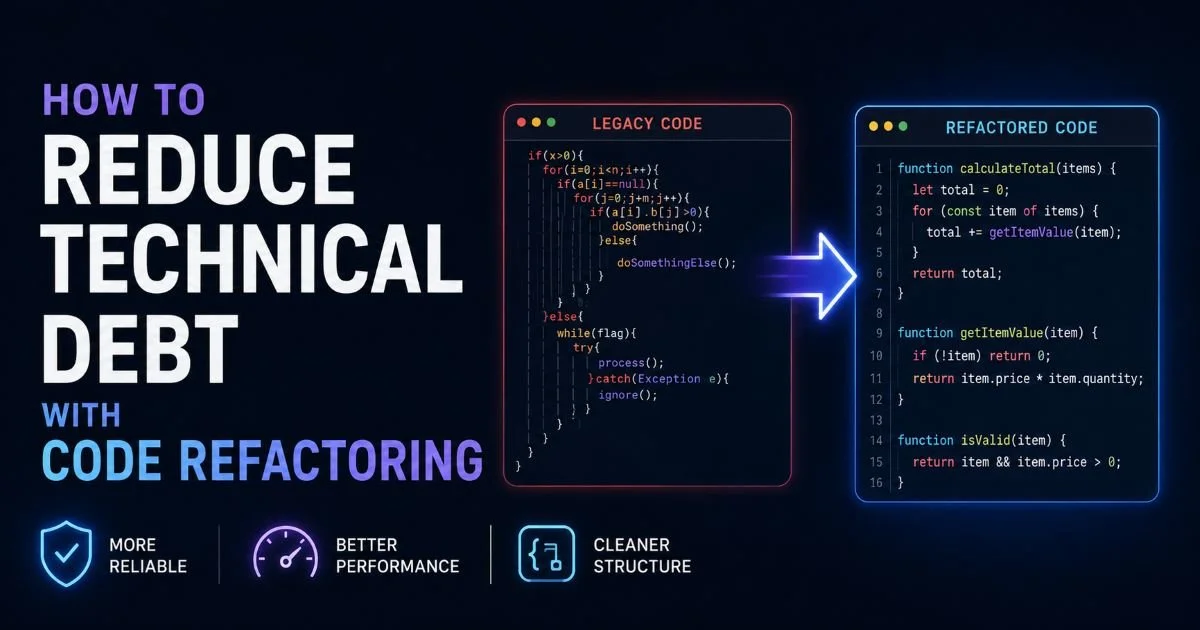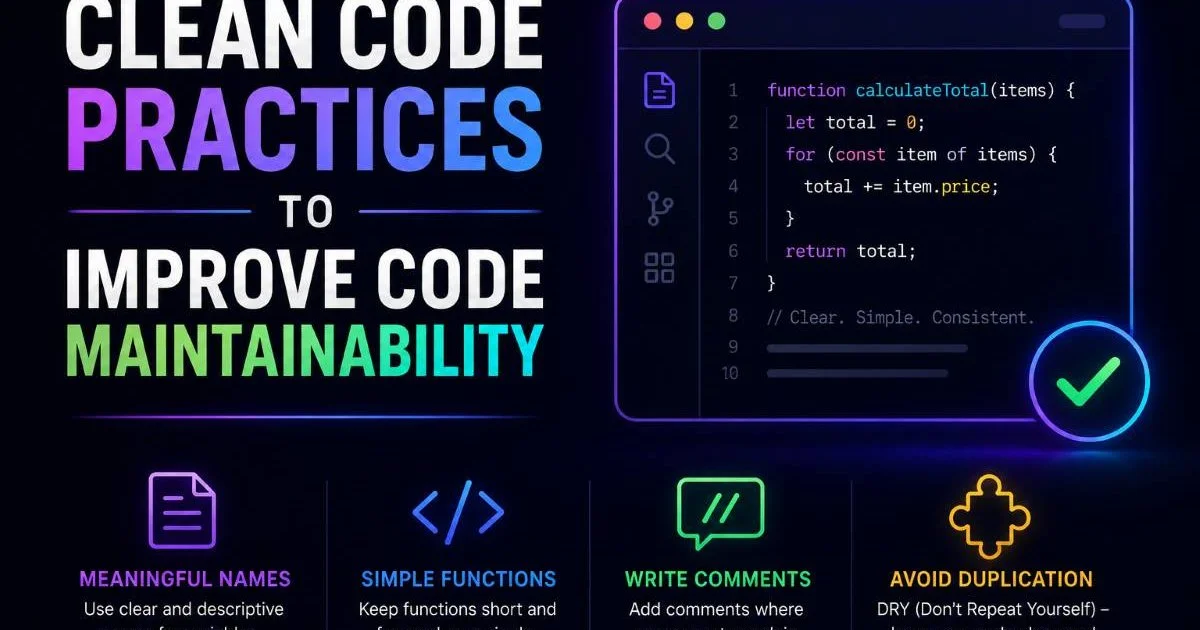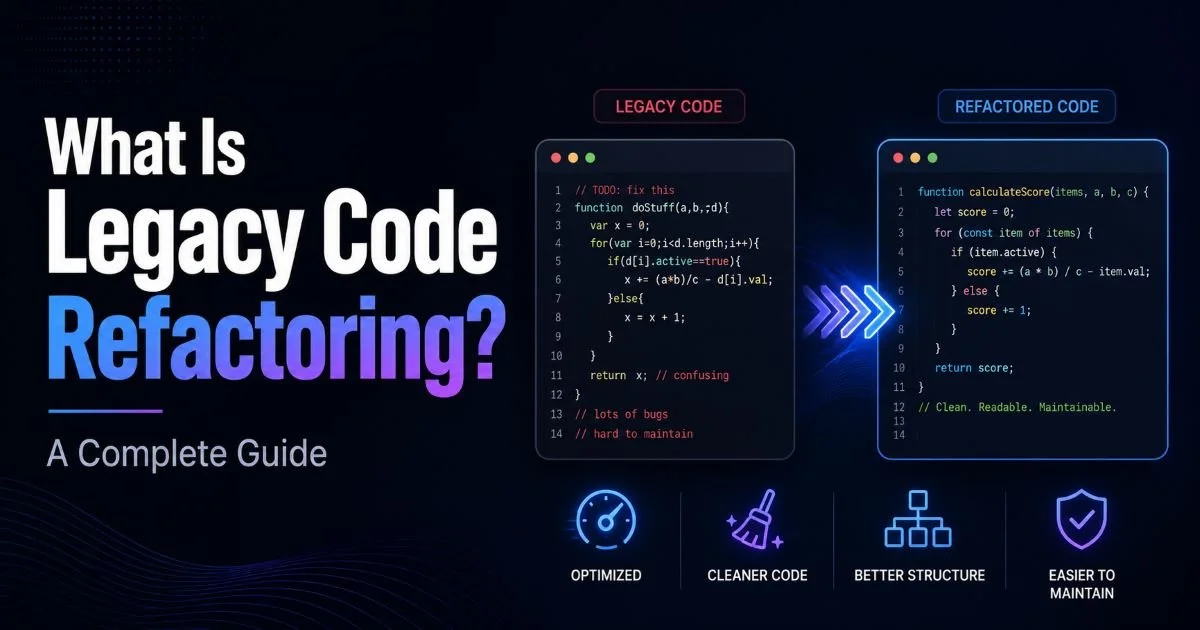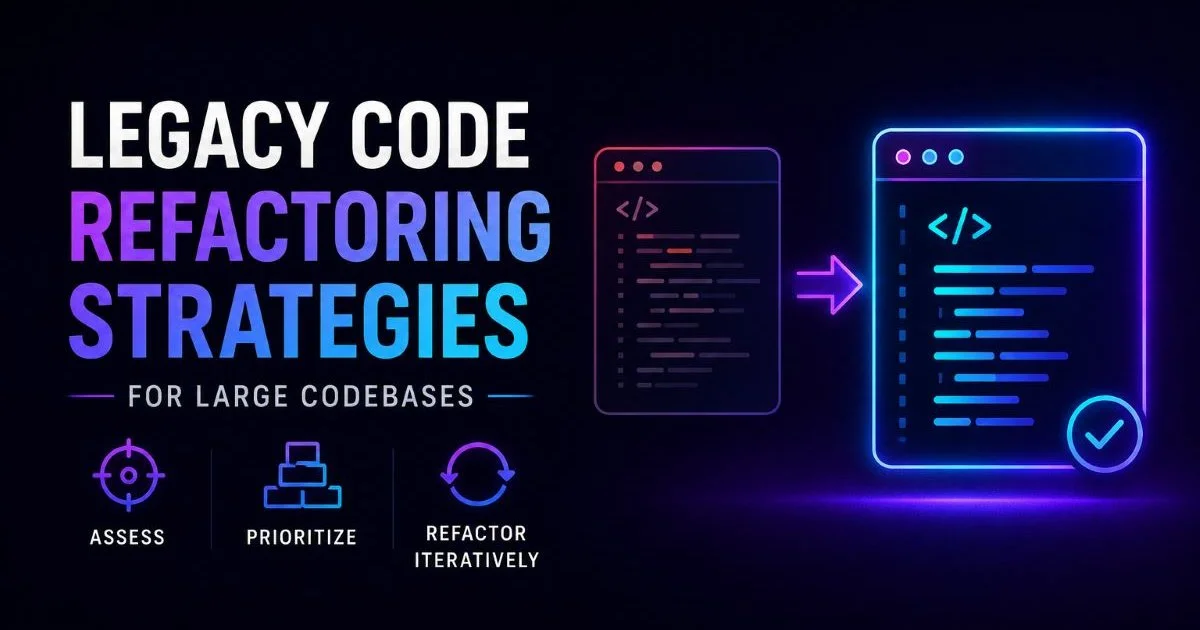
Legacy code refactoring in large codebases is one of the most challenging tasks a development team can face. When systems grow over years (sometimes decades), they accumulate technical debt that slows feature development, introduces fragile dependencies, and makes onboarding new developers painful.
The stakes are real: poorly maintained legacy systems cost organizations billions annually in lost productivity and incident response. Refactoring isn't about rewriting everything from scratch. It's about systematically improving code maintainability, reducing risk, and creating a foundation for sustainable development. This guide walks you through a practical, step-by-step approach to tackling legacy code refactoring in codebases that span hundreds of thousands (or millions) of lines.
Whether you're dealing with a monolithic Java application or a sprawling PHP system, these strategies apply. For a broader overview of the principles behind this work, our guide to legacy code refactoring covers the foundational concepts worth understanding first.
Key Takeaways
- Always establish a comprehensive test harness before changing any legacy code.
- Use dependency graphs to identify high-impact modules worth refactoring first.
- Adopt the Strangler Fig pattern to replace legacy components incrementally.
- Track measurable metrics like cyclomatic complexity to prove refactoring progress.
- Refactor in small, reviewable pull requests to minimize risk and maintain velocity.

Step 1: Assess and Map the Codebase
Before you refactor a single line, you need to understand what you're working with. Large codebases often lack up-to-date documentation, and the developers who originally wrote key modules may have left the organization. Start by generating static analysis reports using tools like SonarQube, CodeClimate, or NDepend. These tools give you an immediate picture of code complexity, duplication rates, and potential vulnerability hotspots across the entire project.
Build a Dependency Graph
A dependency graph shows you which modules depend on which, revealing tightly coupled areas that will resist change. Tools like Madge (for JavaScript), JDepend (for Java), or Deptrac (for PHP) can generate these automatically. What you're looking for are circular dependencies and modules with excessive fan-in or fan-out. A class that 40 other classes depend on is a much riskier refactoring target than an isolated utility module.
Identify Hot Spots
Not all legacy code deserves your attention equally. Cross-reference your static analysis data with version control history to find "hot spots," files that change frequently and have high complexity. Adam Tornhill's technique from "Your Code as a Crime Scene" works well here. A file with 30 revisions per quarter and a cyclomatic complexity score above 50 is actively causing pain. That's where your refactoring effort will yield the greatest return.
Prioritize ruthlessly. You can validate your HTML templates and markup during this assessment phase using tools like the HTML code tester from VisionVix to catch structural issues in legacy view layers. Build a ranked list of modules by combining change frequency, defect density, and coupling score. This list becomes your refactoring roadmap.
Run "git log --format=format: --name-only | sort | uniq -c | sort -rg | head -20" to quickly find your most frequently changed files.
Step 2: Establish a Safety Net with Tests
Refactoring without tests is like performing surgery blindfolded. Michael Feathers defines legacy code as "code without tests," and that definition holds up in practice. Before you touch any module on your refactoring roadmap, your first task is building enough test coverage to catch regressions. You don't need 100% coverage; you need coverage over the behaviors you're about to change. This is where most teams fail: they skip the test-writing phase because it feels unproductive, then break things in production.
Read also How To Conduct an AI Risk Assessment Under EU Law
Characterization Tests
Characterization tests (sometimes called "golden master" tests) capture the current behavior of the system, bugs and all. You run the code with known inputs, record the outputs, and write assertions against those outputs. The goal isn't to verify correctness; it's to detect unintended changes. For a function that processes invoice data, feed it 50 representative invoices and snapshot every output field. When you refactor that function later, any deviation from the snapshot tells you something changed.
Don't "fix" bugs you discover during characterization testing. Document them separately. Mixing bug fixes with refactoring makes both harder to verify.
Integration and Contract Tests
For modules with external dependencies (databases, APIs, message queues), write integration tests that verify the contracts between components. Consumer-driven contract testing with tools like Pact is especially valuable in large codebases where teams own different services. These tests catch interface-level breaking changes that unit tests miss. If your legacy system talks to a payment gateway, a contract test verifies that your request format and response handling remain compatible after refactoring.
Aim for a practical coverage target. In my experience, getting characterization tests over the top 20 hot spot files typically covers 60 to 70 percent of the behavior that matters. Track your coverage metrics in CI and set a threshold: no refactoring pull request gets merged unless coverage on the affected files stays above the baseline. This discipline prevents the common trap of "we'll add tests later."
Step 3: Apply Incremental Refactoring Patterns
With tests in place and a prioritized roadmap, you can start the actual refactoring. The cardinal rule is this: never attempt a big-bang rewrite. Studies consistently show that large-scale rewrites fail more often than they succeed. Instead, apply incremental patterns that let you replace legacy code piece by piece while the system continues running in production. Each change should be small enough to review in a single pull request and deploy independently.
Strangler Fig Pattern
Martin Fowler's Strangler Fig pattern is the gold standard for incrementally replacing legacy systems. The idea is simple: route new functionality through a new implementation while the old code continues handling existing traffic. Over time, you migrate more and more traffic to the new code until the old module can be safely deleted. In practice, this often involves placing a facade or proxy layer in front of the legacy component that can route requests conditionally.
For example, suppose you have a monolithic order processing module with 15,000 lines of tangled business logic. Create a new OrderProcessor service alongside it. Route orders for a single product category through the new service while everything else still hits the old code. Validate that outcomes match. Then expand to additional categories. This approach dramatically reduces the risk of each individual change and gives you a clear rollback path.
"Refactoring a large codebase is a marathon, not a sprint. The teams that succeed are the ones that measure progress in weeks, not days."
Extract and Delegate
Within individual files, the Extract Method and Extract Class refactorings from Martin Fowler's catalog are your workhorses. When you encounter a 500-line method, identify cohesive blocks of logic and extract them into well-named methods or separate classes. Use the "Sprout Method" technique from Feathers: when you need to add new behavior to a legacy method, write the new code in a fresh, tested method and call it from the original. This prevents existing clean code from getting tangled with legacy logic.
Apply the Dependency Inversion Principle to break hard-coded dependencies. If a class directly instantiates a database connection, extract an interface and inject the dependency instead. This single change makes the class testable in isolation and opens the door for swapping implementations later. Each of these micro-refactorings takes minutes to hours, not days, and each one leaves the codebase in a measurably better state.
Use your IDE's built-in refactoring tools (Rename, Extract Method, Inline Variable) instead of manual edits. They're safer and faster.
Step 4: Measure Progress and Maintain Clean Code
Define Refactoring Metrics
You can't justify continued investment in refactoring without data. Track concrete metrics that demonstrate improvement over time. Cyclomatic complexity, code duplication percentage, average method length, and coupling between modules are all measurable and meaningful. Set up dashboards in SonarQube or similar tools and review them in sprint retrospectives. When your team can show that average cyclomatic complexity dropped from 45 to 18 over a quarter, that's a compelling story for stakeholders.
| Metric | Tool | Target Range | Why It Matters |
|---|---|---|---|
| Cyclomatic Complexity | SonarQube, CodeClimate | Below 10 per method | Indicates branching complexity and test difficulty |
| Code Duplication | SonarQube, CPD | Below 3% | Duplicated logic multiplies bug surface area |
| Afferent Coupling | NDepend, JDepend | Context-dependent | High fan-in means changes ripple widely |
| Test Coverage (hot spots) | Istanbul, JaCoCo | Above 80% | Safety net for continued refactoring |
| Mean Time to Recovery | CI/CD metrics | Below 1 hour | Reflects system resilience and deploy confidence |
Build a Refactoring Culture
Technical debt accumulates when teams treat refactoring as a separate activity from feature work. The most effective teams embed refactoring into their daily workflow. Follow the Boy Scout Rule: leave every file you touch slightly better than you found it. Rename a confusing variable, extract a duplicated block, add a missing test. These small improvements compound over months into dramatic codebase improvements without requiring dedicated "refactoring sprints."
Establish code review standards that explicitly address clean code principles. Reviewers should flag new code that increases coupling or duplicates existing logic. Create architectural decision records (ADRs) documenting why certain patterns were chosen during refactoring, so future developers understand the rationale. Legacy codebases didn't become messy overnight, and they won't become clean overnight either. Consistency and patience matter more than any individual technique.
Allocate roughly 15 to 20 percent of each sprint's capacity to technical debt reduction. This rate is sustainable and produces visible results within a quarter.
Frequently Asked Questions
?How do I build a dependency graph for a large Java codebase?
?Is the Strangler Fig pattern better than a full rewrite for legacy systems?
?How long does refactoring a large legacy codebase realistically take?
?What's the biggest mistake teams make before refactoring legacy code?
Final Thoughts
Refactoring legacy code in large codebases requires discipline, measurement, and a commitment to incremental progress. Start by mapping what you have, build a test safety net, apply proven patterns like Strangler Fig and Extract Method, and track your metrics relentlessly.
The payoff is real: faster feature delivery, fewer production incidents, and a codebase that developers actually want to work in. Clean code doesn't emerge from heroic rewrites. It emerges from hundreds of small, deliberate improvements made by teams that refuse to accept technical debt as permanent.
Disclaimer: Portions of this content may have been generated using AI tools to enhance clarity and brevity. While reviewed by a human, independent verification is encouraged.