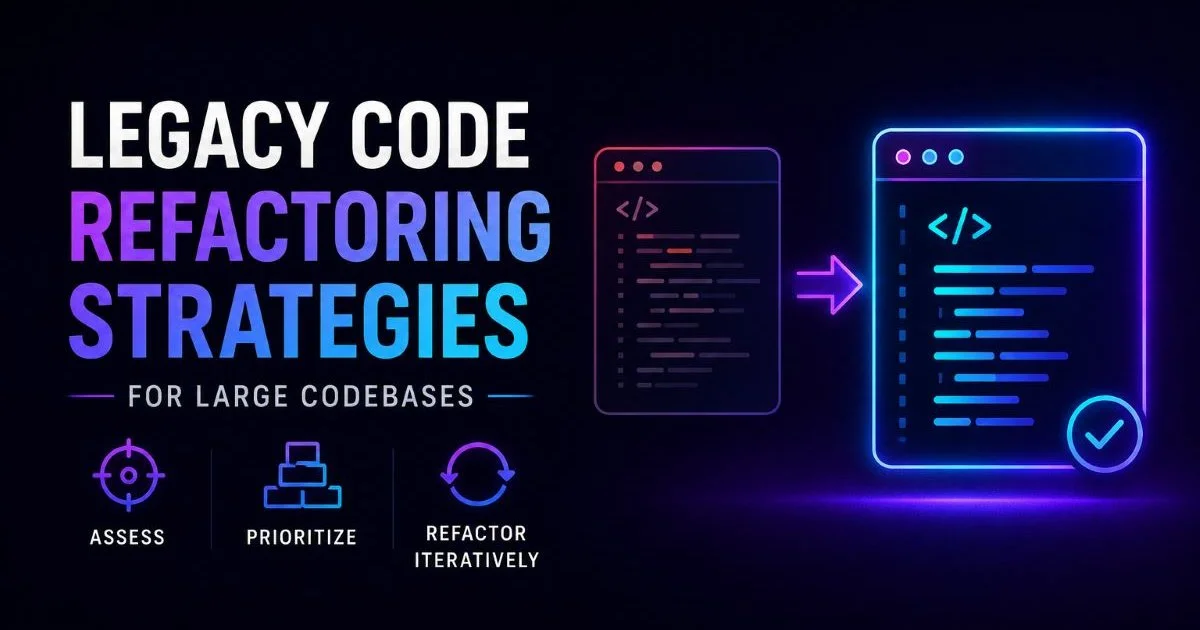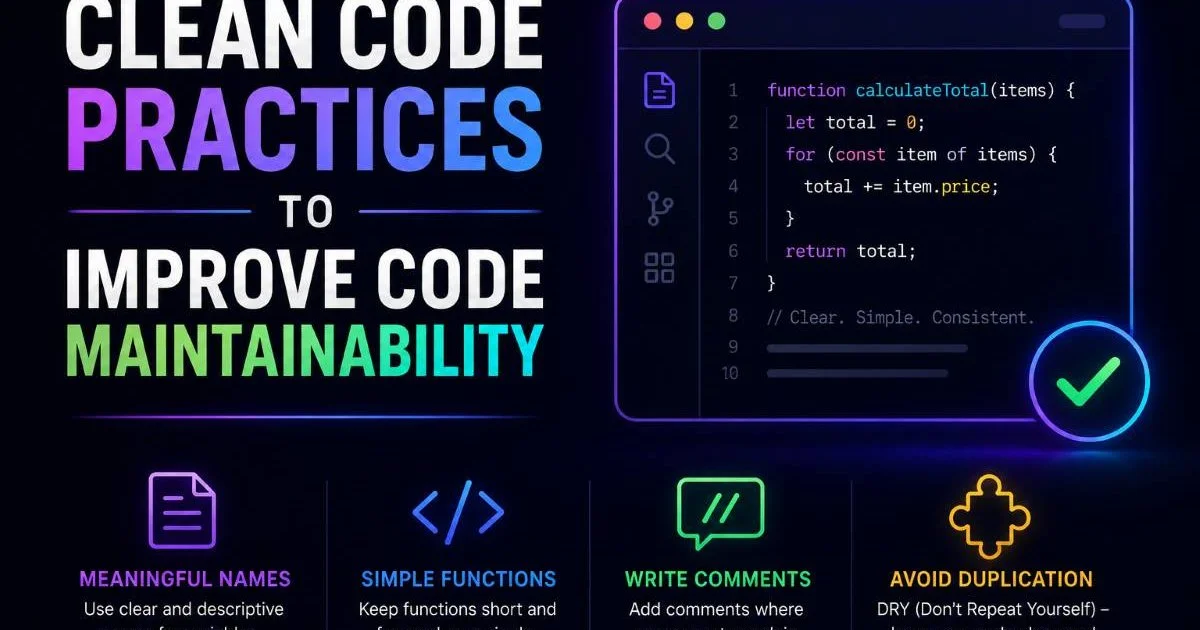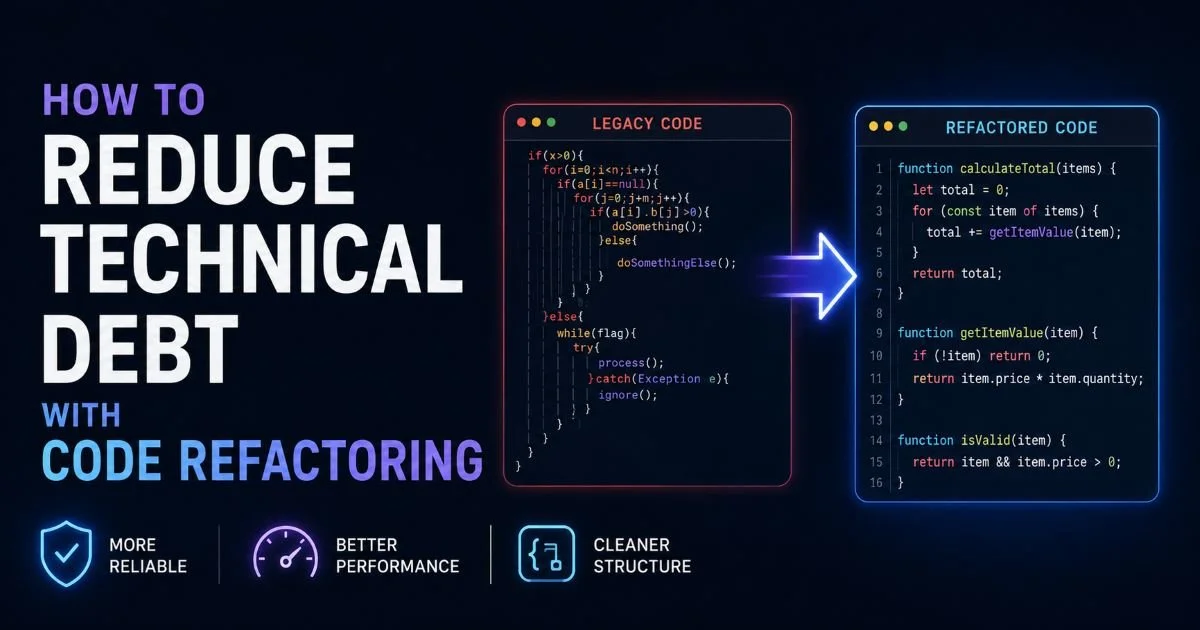
Legacy code refactoring is one of the most effective strategies for reducing technical debt in software projects that have grown unwieldy over time. Every development team has faced a codebase where patches were layered on patches, shortcuts became permanent fixtures, and documentation fell behind. The cost of ignoring this accumulation is real: slower feature delivery, more bugs in production, and developer frustration that drives turnover. Clean code doesn't happen by accident.
It requires deliberate, systematic effort to reshape existing systems without breaking them. This guide walks you through a practical, step-by-step approach to tackling technical debt through disciplined refactoring. If you want to understand the broader philosophy and methods behind modernizing aging systems, our detailed guide on legacy code refactoring covers the fundamentals. The steps below will give you an actionable playbook you can start applying this week.
Key Takeaways
- Quantify technical debt before refactoring so you can prioritize the highest-impact areas first.
- Automated tests are your safety net; never refactor without them in place.
- Small, incremental changes reduce risk far more than large rewrites ever will.
- Code maintainability improves measurably when you apply consistent naming and structure conventions.
- Tracking refactoring metrics over time proves the business value to stakeholders.

Step 1: Audit and Quantify Your Technical Debt
Identify Debt Hotspots
Before you touch a single line of code, you need a clear picture of where your technical debt actually lives. Run static analysis tools like SonarQube, CodeClimate, or NDepend against your codebase. These tools surface metrics like cyclomatic complexity, code duplication percentages, and dependency coupling. The output gives you an objective baseline rather than relying on gut feelings about which modules are "messy."
Pair the static analysis with your version control history. Files that get changed most frequently alongside bug-fix commits are almost always debt hotspots. Adam Tornhill's work on behavioral code analysis showed that combining change frequency with complexity scores pinpoints the files causing the most pain. A 500-line file changed twice a year matters far less than a 200-line file touched in every sprint with recurring defects.
Create a Debt Inventory
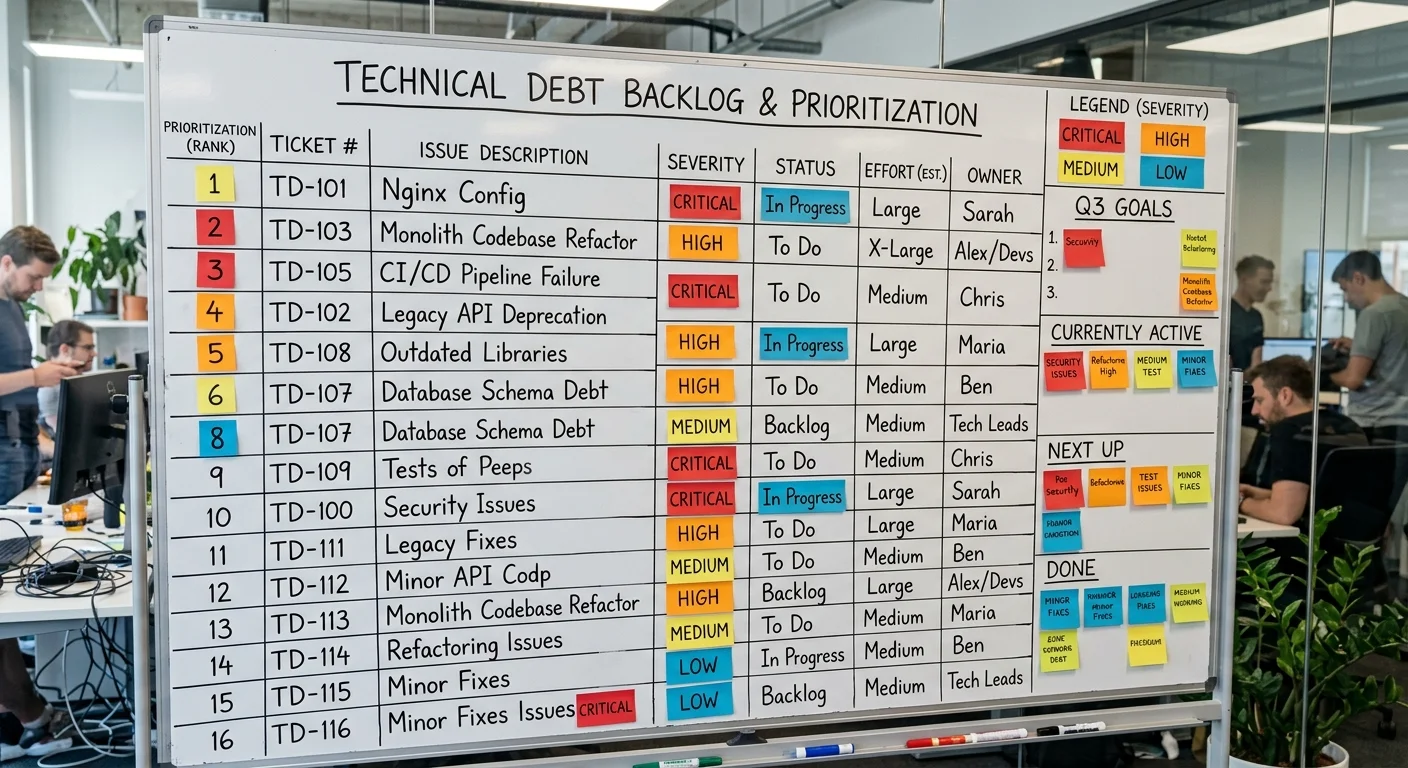
Document what you find in a prioritized inventory. Each item should include the file or module name, the type of debt (architectural, code-level, test-related), an estimated effort to address it, and the business impact of leaving it untouched. This inventory becomes your refactoring backlog. Without it, teams tend to refactor whatever annoys them personally instead of what actually matters to delivery speed and stability.
| Severity Level | Example | Typical Impact | Priority |
|---|---|---|---|
| Critical | Circular dependencies between core modules | Blocks new feature development | Immediate |
| High | God classes exceeding 1000 lines | Frequent merge conflicts, slow reviews | Next sprint |
| Medium | Inconsistent error handling patterns | Intermittent production bugs | Within quarter |
| Low | Outdated variable naming conventions | Reduced readability for new team members | Opportunistic |
Use git log analysis commands like "git log --format=format: --name-only | sort | uniq -c | sort -rg | head -20" to find your most frequently changed files.
Step 2: Establish Test Coverage Before Refactoring
Write Characterization Tests
Refactoring legacy code without tests is like performing surgery blindfolded. Michael Feathers coined the term "characterization tests" in his book "Working Effectively with Legacy Code," and the concept remains indispensable. These tests don't validate correctness per se; they capture the current behavior of the system. You run the code, observe its output, and write tests that assert exactly that output, warts and all.
Read also How Often Should You Run Website Security Scans
Start with the modules you identified as high-priority debt in step one. For each module, write tests that cover the main execution paths, edge cases you can identify, and any known quirky behavior the team has documented informally (or complained about in Slack). Integration-level tests are often more practical than unit tests for tightly coupled legacy code because the boundaries between units are blurred.
Never start refactoring a module that has zero test coverage. Even a few characterization tests dramatically reduce the risk of introducing regressions.
Set Coverage Thresholds
Aim for at least 70% branch coverage on any module you plan to refactor. This isn't an arbitrary number. Research from Microsoft's empirical software engineering group found that coverage below this threshold correlates with a significantly higher rate of post-refactoring defects. You don't need 100% coverage, which is often impractical for legacy systems, but you need enough to catch behavioral changes during your refactoring work.
Consider using mutation testing tools like Stryker (JavaScript/C#) or PIT (Java) to verify your tests actually catch meaningful changes. High line coverage with weak assertions gives false confidence. If you find that debugging complex legacy behavior is slowing you down, AI-powered code debuggers can help you understand execution paths and identify the specific logic branches you need to cover with tests before making changes.
Step 3: Apply Targeted Refactoring Techniques for Clean Code
Extract and Simplify
With tests in place, begin with the refactoring technique that delivers the most immediate readability improvement: Extract Method. Take those 80-line functions and break them into smaller, named functions that describe what each block does. A method called "calculateShippingDiscount" communicates intent far better than a comment above 15 lines of nested conditionals. Martin Fowler's refactoring catalog lists this as the single most commonly applied transformation for good reason.
Follow Extract Method with Extract Class when you notice a single class handling multiple responsibilities. A classic symptom is a class with groups of fields that are always used together but separately from other field groups. Pull those cohesive field clusters into their own classes. This directly improves code maintainability because each class now has a focused purpose, making it easier to test, understand, and modify independently.
"The goal of refactoring is not to make code clever. It is to make code obvious."
Rename variables, methods, and classes aggressively. Names like "temp," "data," "handler," and "manager" are so generic they communicate nothing. Replace "processData" with "validateAndNormalizeUserInput." Replace "mgr" with "subscriptionLifecycleCoordinator." Yes, longer names are fine. Modern IDEs autocomplete them, and the cognitive load reduction for the next developer reading your code is substantial. Clean code starts with names that eliminate the need for comments explaining what something does.
Eliminate Duplication and Dead Code
Duplicated logic is one of the fastest-growing sources of technical debt. When a bug gets fixed in one copy but not the other three, production incidents follow. Use your static analysis tools to find duplicated blocks, then extract the shared logic into a single method or utility class. Be careful with near-duplicates; sometimes what looks like duplication actually handles genuinely different business rules. Verify with your domain experts before merging similar-looking code paths.
Not all duplication is bad. Sometimes two pieces of code look identical today but will diverge as business requirements evolve. Apply the "Rule of Three" before extracting shared logic.
Dead code removal is equally important and often overlooked. Commented-out blocks, unused imports, unreachable branches behind feature flags that were never cleaned up: all of it adds noise. Every line of dead code is a line that future developers will read, wonder about, and hesitate to delete because "maybe someone needs it." Your version control system stores history. Delete the dead code confidently and let git preserve the archaeological record.
Step 4: Measure Results and Sustain Code Maintainability
Track Meaningful Metrics
After each refactoring cycle, compare your metrics against the baseline you established in step one. Track cyclomatic complexity reduction, test coverage improvement, code duplication percentage, and deployment frequency. The last one matters because refactoring should eventually speed up delivery. If your team is spending fewer hours navigating convoluted code, features should move through the pipeline faster. Present these numbers to stakeholders who question why developers are "rewriting working code."
Monitor your mean time to resolve (MTTR) for production incidents in refactored modules. This metric directly demonstrates business value. A module that previously took four hours to debug and patch but now takes 45 minutes represents a concrete, measurable improvement. Pair this with deployment lead time data and you have a compelling narrative for continued investment in code quality. Engineering managers and product owners respond to evidence, not abstract appeals about "code health."
Build Refactoring Into Your Workflow
Sustainability is the hardest part. One-off refactoring sprints feel productive but rarely prevent debt from reaccumulating. Instead, adopt the Boy Scout Rule: leave every file you touch slightly better than you found it. Allocate 15 to 20 percent of each sprint's capacity to refactoring tasks pulled from your debt inventory. This keeps the work visible in your project management tool and prevents it from becoming invisible "background" work that gets cut when deadlines tighten.
Enforce quality gates in your CI/CD pipeline. Block merges that increase cyclomatic complexity beyond your threshold, introduce new code duplication above a set percentage, or drop test coverage below your target. Automated enforcement removes the burden of manual code review policing and makes quality standards objective rather than a matter of individual reviewer preference. Tools like SonarQube's Quality Gates feature handle this well out of the box.
Create a "refactoring Friday" ritual where your team spends the last two hours of the week on small, satisfying cleanup tasks from the debt inventory. It builds habit without disrupting sprint goals.
Frequently Asked Questions
?How do I write characterization tests before refactoring legacy code?
?Is SonarQube better than CodeClimate for finding debt hotspots?
?How long does it realistically take to reduce technical debt through refactoring?
?What's the biggest mistake teams make when starting a refactoring effort?
Final Thoughts
Reducing technical debt through code refactoring is not a one-time project. It is an ongoing discipline that pays compound interest over the life of your software. The four steps outlined here, auditing your debt, building test coverage, applying targeted techniques, and measuring results, form a repeatable cycle.
Each iteration makes your codebase more approachable, your deployments less stressful, and your team more productive. Start with the worst offender in your repository this week, apply these steps, and let the results speak for themselves.
Disclaimer: Portions of this content may have been generated using AI tools to enhance clarity and brevity. While reviewed by a human, independent verification is encouraged.